Description

An Invitation to an Amazing Oaxacan Adventure
Showing posts with label Textiles. Show all posts

Friday, January 31, 2020

It’s Good to have a Mission


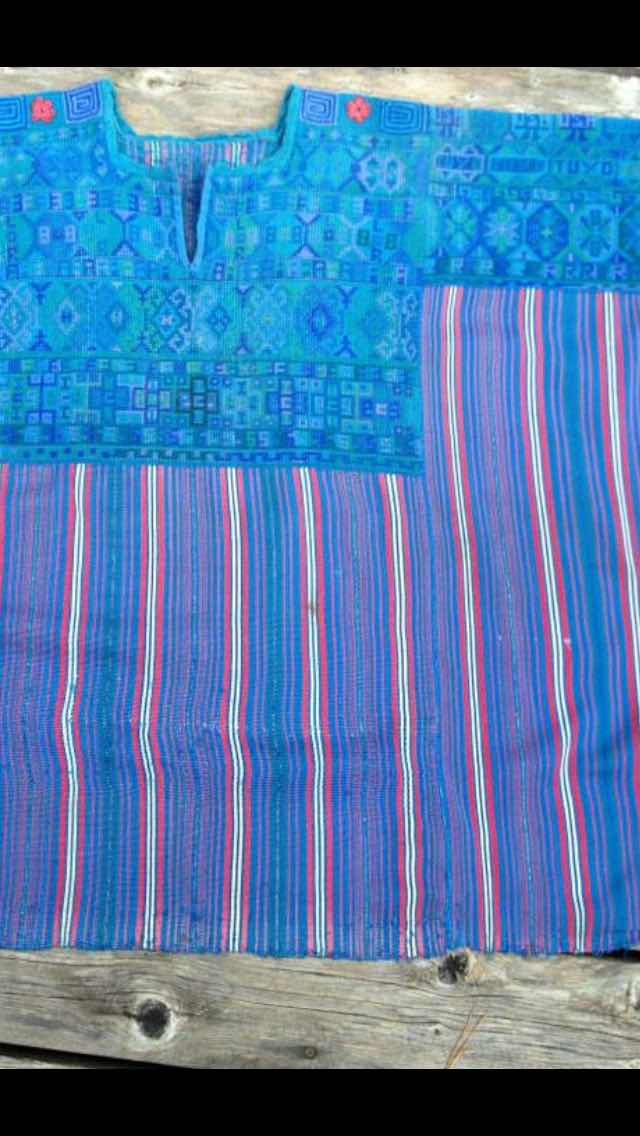
Okay morning glories, here’s the story - I bought this beautiful huipil shown above about eight years ago in a shop in Oaxaca. I bought it mostly because it looked good on me, it felt good to wear it and the handfeel was nice as it was used and had clearly been washed many times.  This was one of those pieces of clothing that felt like an old friend.

It was only after I had owned the piece for several months that I started to notice some things. First I saw there were letters and numbers woven into the design. When I looked more closely I noticed the letters USA and tuyo were woven into the shoulder panels. Whoa!!!  This was some skillful weaving in that the designs were almost hidden, barely visible. The weaver had used color as camouflage. But once you started looking, you just kept seeing more and more. The piece was revealing itself to me but slowly. It was striped red, white and blue (with the faintest shot of silver thread through it as is the fashion in some communities).  And then, and I couldn’t believe my eyes at first, I saw dollar signs woven into the center panel of the garment. What? American flag? USA? $$$ ?  Made on a backstrap loom in Guatemala?  What exactly was going on here?

I asked some anthropologists friends and textile loving friends including the shopkeeper I bought the piece from. We all had our theories but they were just that. No one really knew.

With a little bit of research and a false start or two and mostly the help of Deborah  Chandler’s 2009 book Guatemalan Woven Wealth, I was able to identify the place my piece was made as coming from San Juan Atitlan near Huehuetenango. There  appears to be a custom here of weaving words into their clothing. Chandlers book had an example that said “Feliz” And “Corazón” And even one that said “Estados Unidos”.  I have also seen pieces that said “Japan” and “Pepsi”.  But none of the examples were as skillfully woven as mine, a real masterpiece. 

I mean what exactly is going on here? Is there some longing for faraway places and things? Or have they always woven items of desire into their clothing? Do they put prayers for things they want and places they want to see into the garment? It used to be a good harvest and health now it’s Pepsi and dollar signs? Has literacy replaced age old symbolism or is this innovation? And what’s with those commercial round red flower pieces sewn on the shoulders?  You’ll notice I’m using a lot of question marks.

And so this, dear reader, is what  is propelling me to leave the comforts of my little home in Oregon and venture into the outback’s of Guatemala. Maybe, and it’s a big maybe, if I venture out to this village of which I know pretty much nothing, except it will take me an hour to traverse the 15 mile road from the state capital to its town square, just maybe I can find someone who can tell me more about what’s happening in this work. The huipil is definitely talking to me.  I’m just not sure what it’s saying. And San Juan Atitlan may be the only place I can find a translator. So wish me luck. And fingers crossed I won’t take a wrong turn and I’ll stay open to whatever happens. 

Monday, June 10, 2019

The Weaver at Work

Oaxacan weaver
Add captionThe Weaver 


In Teotitlan de Valle - creating with thread and light

Wednesday, July 4, 2018

My October Tour and the Land of This is Not Normal

- Plants and Animals - Seed Necklaces purchased on the streets of Oaxaca and handyed rug from Josefina Lopez - they use a local plant huizache for that gorgeous black and pomegranate bark for the browns.


I was thinking this was going to be a post about how thrilled I am that my October Artisans, Markets, & Village tour is totally full.  And all women signed up. I did not plan it that way.  It just happened so it  must be meant to be!! I'm going to have a great group of chefs,  historians, activists, and artists to travel with.That's code for we're mostly a group of retired women who are doing exactly what we want. 
But instead this is more of a post about the family separations happening and how I feel so woke to the need for all of us to step up and do what we can to uphold the best that this country has to offer in the face of the looming potential for the rising fascism and racism we see all around us . I don't think my concerns are exaggerated. I think this administration has shown us exactly what they are capable of - which is to say they are capable of anything. So as the saying goes, "My page, my politics" and you might find my charming little art/travel blog veering off into the realm of peace and social justice. I'm going to use the tiny forum of this blog to speak up for what I believe.
 I've been an "ally" for a long time - it only makes sense really since I've been running these tours to Oaxaca for a while now. In the process I have almost always been received with tremendous respect, thoughtfulness, and grace when traveling. Fewer things give me more pleasure than watching someone have their heart and soul opened to the wonders of this ancient land. Mexico and her people have been so good to me.  I'd like my nation to return the favor. How about you?


Monday, July 2, 2018

Spider Women Weavers in Teotitlan de Valle


So happy to read this beautiful story by Deborah Needleman in the NYT  T Magazine
 about Vida Nueva, the women's rug making co-operative in Teotitlan de Valle - the women of this cooperative are what I  have heard  referred to as "un muy bueno ejemplo", a good example, for other women to see.
photo T Magazine

Sunday, May 6, 2018

To Bargain or not to Bargain


There's so many beautiful, handmade, high skill set textiles and other awesome crafts available in Oaxaca.  The question always comes up on a tour about whether to bargain or not to bargain. Basically, bargaining has never been my strong suit.  I like what one of my early tour goers, who now spends months a year in Oaxaca and, rumor has it, owns some spectacular local clothing, had to say about bargaining (from Norma Schafers' blog Oaxaca Cultural Navigator which you can read by clicking here) -
"I never bargain in Oaxaca. If an artisan gets more money than he/she expected from me, and maybe even thinks me a fool, I don’t care. I have so much and most artisans have so little. To buy for a higher price is a way to help without the stigma of “charity”. I have bought things I can’t use, or can’t pack to take home, as a thank you for craft demonstrations. Even if buying from a reseller, rather than the original maker, I think sitting in a market booth for hours is hard work too. " - Jill Bennett

I might add, that if the artisan makes the first move to bargain, which, if it's going to happen, usually happens when you walk away, that, in this kind of instance, it's OK to bargain a little.  Or maybe a little discount if you're buying a big quantity.  But my experience is that the sellers in a Mexican market can be generous and often throw in a little extra something something as a way of saying thank you at the very end of the sale. Without exception, when I buy in Oaxaca,  I always feel like I am getting a spectacularly good price for something beautiful. Most artisans don't charge enough.  (there I said it).....
 

The Deep Contentment of the Artisans of Oaxaca


 There is a chance to visit with so many talented artisans in Oaxaca and this trip was no exception with highlights from potters, weavers, dyers, and tinmakers.  I have watched Mareya from the Mateo Galan family in Coyotopec do her magic with an exacto knife and a toothpaste cap for years now.  And wow is she getting good.  Her father in law can throw the big pots and she does all the decorative work. They were a little stressed this visit as Lorenzo broke two of his fingers about a month ago and has not been able to work. Yet you can see she has that calm, humble thing with deep pride in her work. I'm pretty sure no two of her pots are alike. She has a huge design repertoire.


This barefoot grandmother gets her workout carding and spinning that big basket of wool to her left everyday. She's contributing to the family rug business and has some serious muscle too.


Josefina Lopez gave the best natural dye demo I've ever been to.  Here she's showing off all the colors from red to bright orange to shades of lavender that she can coax from the cochineal dye.
Can't you just feel her contentment and happiness?


Handspinning cotton high in the hills of Oaxaca, Khadi/Oaxaca is translating Ghandian values of village life, sustainability, & handwork into a beautiful experiment making stunning artisan goods and creating livelihood for hundreds of families. This is fair trade at it's finest.  (Read more about them by clicking here)


And I finally made it out to the town of Barro Rojo, red pottery.  I always see the women from Tlapazola selling their wares at the Sunday Tlacolula market and in town too - O ye of the famed pig toothpick holders.  We always have fun chatting with these women vendors with their pretty aprons and extra long braids.So I was happy to make it out to their bucolic little puebla and visit with a local potter and her family.


It was great to see Marina Martinez demonstrating how she mixes the red and the yellow clay from her community with a little bit of sand and then she hand shaped the classic comal with a corn cob and a piece of leather.  The yellow clay they gather in a pick up truck, the red clay they walk about an hour to gather. Click here for a fun video of her working 
 Really feel extra lucky that we happened to drop in as they prepared their primitive fire, no kiln firing.  It was fun watching skilled masters, all women - sisters and aunts and nieces,  in colorful billowing skirts  building their kiln with boxsprings and shards, and pots, and dung and dried agave leaves, and the roots of carrizo, and strategically placed red hot coals and big sticks of wood.  And sorry no pictures, it's considered bad luck, might make the pots crack! 
I always feel a very peaceful feeling when I come back from villages.

Ode to All Things Pink

I know this happens to everyone: something crosses your consciousness, maybe it's a song, or an idea, or an image and then you start seeing it everywhere, noticing it all around you.  Something you really never ever thought about much before.  Such it is with me and pink and big bright pink and Mexico.  Everywhere I turned. Hence my ode to some things pink -


 That color pink in that first room in the Tamayo Museum.  They say the maestro picked the colors for each room. If you're in Oaxaca don't miss this jewel box of a five room museum.


This santos in Santa Ana Zegache that always has her bright pink dress on.  Also she appears to be more papier mache than polychrome.  


 A pink waterlily makes its fleeting debut at Casa Colonial.


A baby's hat from the highlands of Guatemala seen at the textile museum.  Hashtag more shiny pink fabric and lace. Not my style, but what do I know?


Embroidered pink flower from Tehuantepec, the Isthmus of Oaxaca.  The Mexican people very much have a thing for wearing flowers on their clothes or in their hair. I do not even pretend to understand how deep it goes.


Saturday, May 5, 2018

How Many Rugs is too Many Rugs?


I don't have a store, and even when I did, I never had enough time to really sit down with the leisure it would take to buy the goods for retail when I'm out on a tour with a half dozen people who all want to shop.  So don't ask me how I ended up with a rainbow colored rug from Teotitlan de Valle.  Suffice it to say, I was so moved by the deep knowledge displayed in the natural dye demonstration that the mother of the family had just given us,and I loved that it was the eldest daughter, who was just getting old enough to weave, who had made the rug.  Of course I wanted a rug that showed the complete spectrum of natural dyes they were able to acheive in their home studio. In fact, had to have it. Funny how that goes.


Here's my rainbow colored rug in situ with Angelica, the daughter on the left, holding her handiwork with her mother Josefina. Typically Zapotecs pose rather stoically behind their work. They were all set to do that but I asked them to look at each other instead, which made them smile. Such a nice day and I'm so glad I have the rug to remember it all, although I have absolutely zero idea what I am going to do with it.  Currently it's a runner in the middle of my dining room table.

More Handmade Textile Love in Oaxaca


If you're serious about textiles, no matter if you're a beginner or a serious aficionando, a stop to the textile room at the Belber Jimenez Museum on Matamoros is always delightful. Described as "a little gem" and " a lovely surprise" on Trip Advisor, we couldn't agree more. Sometimes there are short explanations with the work although lately not a sign in site.  This was the room we were in when someone asked me, "But do people really wear these?" and I answered, "Pretty much all the time you see people wearing regional textiles in Oaxaca". And it's true. Still there are some great pieces in this collection that you rarely see on the streets. Plus it's OK to gawk. Worth a visit.

Sometimes You Get Lucky or The Amazing Makers Fair We Stumbled Upon

(this woman could hold a long conversation with you and never once look down at her work, and her hands never stopped moving)

We got very lucky and were able to experience the last day of this two week Easter feria (fair) which  was happening on the alcala just past Santa Domingo. I bet 70 or 80 craftspeople were represented.  Each booth had two different makers with a sign saying the community, name of the artisan, and what they made. Of course a lot of them were keeping busy in their booths with some handwork.  It was off the charts.  Keep in mind, many of these communities are 8, 10, or 12 hours away from the big city and will come in just 3 times a year (Easter, Gueleguetza, and Christmas) to make a little cash and  sell their wares to the tourists - many, many of whom are Mexican tourists and also locals who live in the City.There was a huge concentration of work that would take you days, if not weeks, to survey out roaming the state. That's a lot of doors to knock on.


It's a great chance to talk directly to the people who are making the goods - about their community, their techniques, their ideas and experiences. There were embroiderers, weavers, spinners, sewers, leatherworkers, knifemakers, wood and gourd carvers - each more wondrous than the one before.
Above is one of my favorite designs from the Mixe region in northern Oaxaca.  We talked a little with these people about when their community sued the french designer Isabel Marant for plagiarism (click here for link)  Good for them. I think I'd only paid attention to the blouses and  never really realized how wide and cowgirl their skirts were.  And that belt. Plus our model could not have been any sweeter twirling her skirt for us. 


As always, doing our best to put our tourist dollars directly into the hands of the makers.  Here's Margie with her handspun, indigo dyed, raw silk throw she just purchased made in one of the last of the silk raising communities in Oaxaca, San Pedro Cajonos. The maker was kind enough to take a photo wearing a marigold dyed throw. Notice the beautiful knotwork at the end of her piece. (Click here to read more about the history of raising silkworms in Oaxaca) 
This feria happens during Christmas and July Gueleguetza too! Can't wait to visit some of these people in their communities.

And here's just a little tease to give you some idea of the magnificent quality of work on view and for sale - this is a kind of tree of life design (click here to read more about this particular design)


I did say one more beautiful than the next didn't I? Fun color play going on in this piece above plus my personal new, seeing it everywhere symbol, the zig zag. And yes you may tell me the design stands for a snake or a thunderbolt or the path we take in life but someone told me at this fair, in a much more prosaic vein, that the zig zag symbolizes the ups and down in a marriage. So there you have it - family counseling, marriage advice, and weaving all rolled into one.  

Tuesday, September 12, 2017

I'm Giving a little Talk


Very much looking forward to giving a slideshow on Textile Traditions of Southern Mexico in conjunction with Lane Arts Fiesta Cultural.  The Fiesta is a three month extravaganza celebrating Latin Culture in Eugene. And some exciting things are happening - besides great music, dance, and arts  -  Maria Hinojosa, host of radio show Latino USA  is at U of O on October 5 talking about "We the People" and the incredibly brave 'undocumented' author and filmmaker Jose Antonio Vargas is speaking at U of O October 24. Click here for a more complete link to The Fiesta Cultural offerings.


In between those two powerhouses, on Tuesday October 17th at 7 pm,  I'm doing a little slideshow over at Lincoln Gallery (at 4th & Lincoln) about the various weavers I have encountered in my travels through Oaxaca and Chiapas. Super psyched as it was a great opportunity to gather my  photos and videos from 8 different trips all into one place. And also to gather my thoughts about what I have learned.


I am by no means an expert on textiles or Oaxaca & Chiapas  but I have seen a few things that have moved me to share.  I am hoping those of you who have traveled here, those of you who love textiles, those of you who weave and those of you want to learn more about our neighbor to the south will come. Wear your favorite piece of clothing! Some food, some drink, some merriment, and a little show and tell are also on the agenda.

Monday, June 19, 2017

One of My Favorite Textile Destinations in Oaxaca


  Every textile lover who roams the streets of Oaxaca thinks this place is their little secret.  It's the green gate two doors up from the Artisan's market. And it's true, you have to come in and say, "I am a friend of La Duena Juana", or , "I know so and so who knows so and so", before the proprietress, Guadalupe, directs you to her back rooms packed floor to ceiling with a dizzying array of Guatemalan textiles and a few outstanding pieces from the Isthmus as well. Floor to ceiling  It really takes stamina to shop here because there is so much to look at. You could give yourself a whole course in Guatemalan village textiles simply by spending time here.


I always find something fabulous.  Check out this crazy pieces I found in the photo above Do you see the word "pepsi" woven across the middle band?  Would you not love to know what the story is behind that?  I would for sure.

We always spend some time shopping on the tours and I do know all the good textile stores although there are new ones popping up all the time.

Tuesday, January 17, 2017

Snow and Sun


 I am happy to say that the March Art Retreat is just about full with nine people signed up. Just a few weeks ago we only had four and then it just happened really fast.  I think it had something to do with the snow. It snowed and suddenly Oaxaca became just that much more beautiful.  I used the deep powdery snow to try an old Scandinavian trick and cleaned my Zapotec rug in the snow (photo above).  Worked like a charm. So yes it's snowy and I am dreaming of Oaxaca and sending a big welcome to everyone joining us for the retreat.  Two months from today!Nos Vemos!


Tuesday, November 1, 2016

In Search of the True Beginnings of the Flowered Apron


Those of you who have been to Oaxaca with me, or those who might have shopped in my store, or read a few entries in this blog, will know that I have a mild obsession with these embroidered aprons that form the traditional dress of many women in Zapotec villages in the Central Valley. Thus, I could not have been more thrilled to visit in the home workshop of a young woman from St Miguel de Valle who is one with her sewing machine and able to bang out all number of embroidered designs on these gingham aprons with their heavily pleated skirts. She tells us that the idea of embroidering peacocks, which now is a common design feature, was her idea (this is what the creative class and innovation looks like Zapotec style).  She's 28 and has been embroidering since she was 14, so about half her life. An average apron takes her about two or three days to make. Here she is above with her mother in law and two very happy tourists modeling their new aprons.
Click here to see some other apron pics and you'll notice that styles have changed and the rufflier apron has replaced the simpler one. 

Thursday, January 29, 2015

Feeling Lucky


I have been feeling the pull of Mexico, and so, in a nostalgic moment was re-reading the blog. It does become a sort of travel journal. At any rate, I noticed how much I used the word "lucky" as in "We were lucky", "Lucky us", "if we're lucky", "as luck would have it", "We got lucky"....because perhaps a lot of travel is luck, and believing in luck. All of which I thank my lucky stars for every day. :)

Thursday, January 1, 2015

Always time for a little Shopping


Okay, yes, it's fair to say we did do a little shopping.  Here's me in the middle with a couple of my compadres holding up our rug haul.   All the rugs were handwoven with natural dyes and we bought them right at the workshop where they were made.....The rug on the far left is all shades of indigo....be still my beating heart.  Every now and then it's fun to gather in the library of the Casa and have show and tell with what we bought that day.

Wednesday, October 15, 2014

Santo Tomas Jalieza

Abuela from Santa Tomas Jalieza doing her backstrap loom, weaving, thing.  There's a lot of wisdom in those hands. 

Irmgard Johnson Show at Museo Textil de Oaxaca


The Museo Textil de Oaxaca, definitely counts as one of my top twenty favorite small museums in the world.  It has three rooms downstairs always devoted to a single show and then another smaller more artist driven show upstairs.  


Can we just say they, once again,  totally nailed it with another amazing show? This one was devoted to the collection and field notes of early ethnographer and  textile collector Irmgard Johnson who lived and worked in Mexico until her recent death in 2011 when she was well into her nineties.


The textiles were amazingly beautiful and the photos of Irmgard traveling rural Mexico 
 were really inspiring.  We're talking by horseback on  dirt roads in the 30's.   But what took this show to the next level were the unbelievably detailed hand and type written field notes, drawings, and sketches she made of textiles and people she encountered.  There's a little sample above.  She didn't believe you could accurately ascribe meaning to a piece without talking directly to the maker -   The level of devotion she had to her studies is something I have so rarely encountered. And apparently, without her notes and her collection ,huge swathes of Mexican indigenous textiles knowledge would be lost. 


I felt really lucky to be able to see this show and, once again, learned so much about textiles. 
The textiles are never behind glass and you are always encouraged to have a direct encounter.
And the docent on the English speaking tour at el Museo was excellent.
Can't really say enough good things about this little jewel box of a museum.

The Women of Tanivet


 I'm still not sure exactly why I was so deeply moved by these primitive embroidered pieces made by the women of Tanivet, a non indigenous community on the outskirts of Oaxaca.


They came over to the Casa and we got a private showing of oh probably forty or so pieces.


 One more amazing than the next.


We're hoping to start a donation box of fabrics and threads to send to them.
And I wish I had photos of ALL of them.


.  We all bought one and some people bought several.  The women couldn't have been happier to make some serious cash.


Here they are with their pal and cultural cheerleader Marietta Bernstorff (on the right)


  A great big Gracias to the women of Tanivet for sharing their artwork with us. 

Monday, August 11, 2014

Need More Reasons to Love Mexican Textiles


Well said,Sheri Brautigan, well said (see her quote below from an interview in Hand Eye Magazine) and why I always feel good about buying textiles in Oaxaca and why I also think it's important to buy the very best you can afford.

SB: I’m very hopeful that many traditional Mexican textiles will survive and become even finer. This I have seen in Oaxaca and Chiapas. When appreciation comes from the outside world and the artisans can earn money, they have an incentive to keep producing. The more money they can earn from superior work also encourages some artisans with higher skills to train their children. The more affluent indigenous people become, the more pride they have in their own culture and the continuation of their textile traditions.